Where’s that horn?
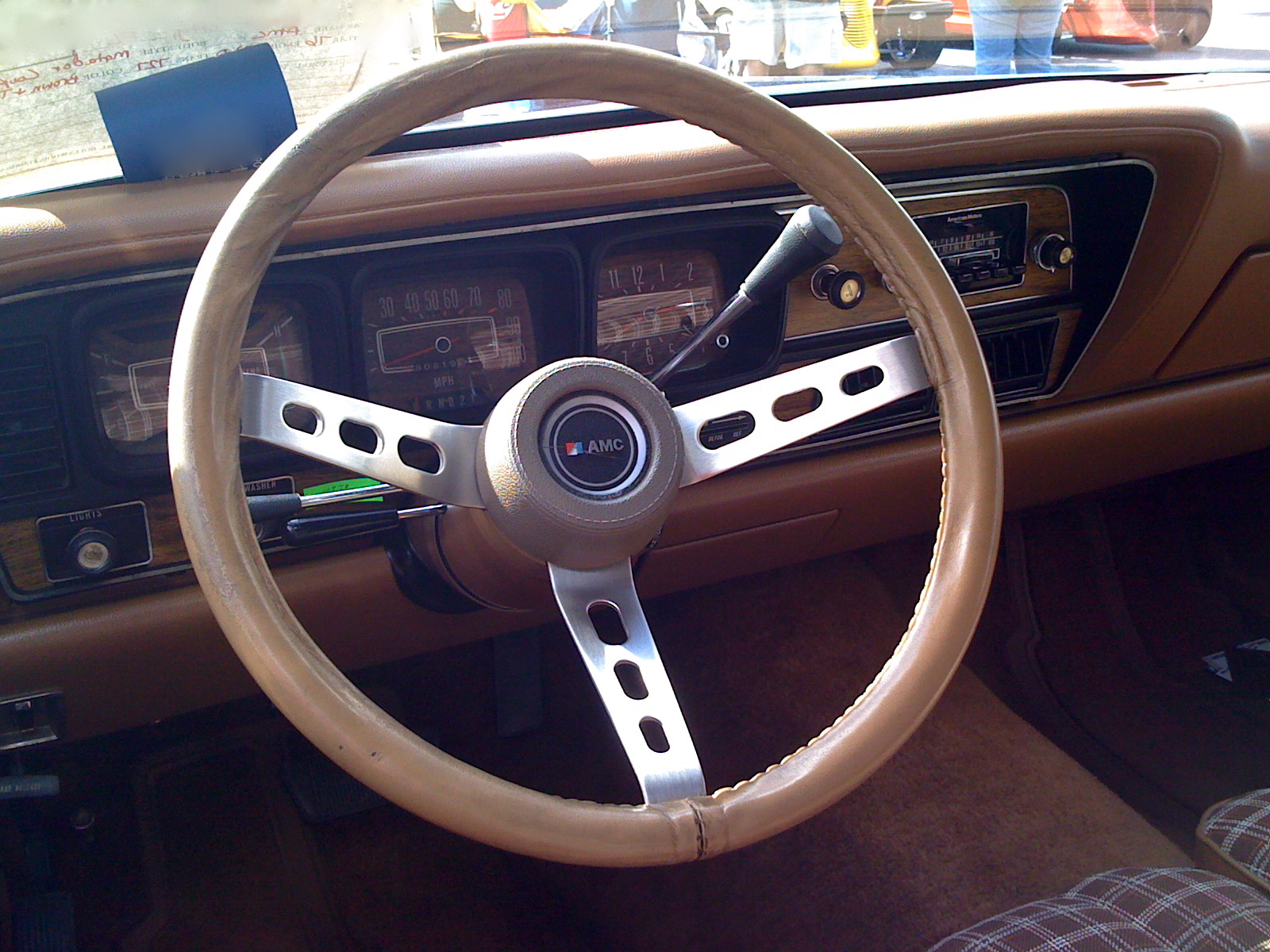
Now, where was that horn again?
The car horn – it’s a strange beast. It might be found on one of the steering column stalks, in the centre of the steering wheel or between the centre of the steering wheel and the wheel itself. What’s it for? Its only legitimate purpose is to let other road users know you’re there. Is it ever used for such a purpose?
Nope.
Well, I’ve used it for that purpose once in my life. Someone began reversing towards me and I gave a little honk to let him know he ought to stop before he dinged me.
Its common usage is twofold:
“Oy! You cut me up, you little shit! Learn to drive!”
and
“Boy, I’ve been stuck in this queue for ever. I think I’ll vent my frustration by honking my horn.”
The first I can understand, the second would wind me up except that I’ve never been exposed to it. In fact I’ve only ever seen it happen on TV. I don’t know if it even happens in real life. I was stuck in traffic for 8 hours on the M25 London Orbital once and not a single person used their horn.
In TV and films, horns are used just before an accident to add a little something to the scene. What happens next depends on the plot, of course. Sometimes the accident is averted, sometimes the oncoming vehicle seems to have time to honk their horn but fails to slow down before plowing into the hapless pedestrian!
Finding the horn in real life is a bit more of a problem. I’m usually too busy braking and swerving to honk at the offending vehicle. In the past couple of years I’ve tried it twice. The first time nothing happened due to technical problems (the garage couldn’t find anything wrong, probably water got in). The second happened last week.
There I was on the roundabout, minding my own business. I saw lights to the left, but being on the roundabout it was my right of way. Suddenly there was a flash of silver in front of me, then it was gone. The car approaching was going so fast, not only did he have no chance of stopping but I barely even saw him cross in front of me. It wasn’t exactly a near miss, he was a good couple of metres away. There was a car parked just off the roundabout with someone in it (he’d just dropped someone off) – I saw the guy’s jaw drop and he was pointing incredulously at the speeding car. If I’d been going any faster probably both my car and the speeder’s would have been written off, the speed he was going.
So I decided, I’m going to give him a good beep. I’m going to give him both barrels, big time. OK, it’s after 10pm and it’s illegal to sound my horn in a built-up area, but I just don’t care. I rammed my hand at the steering column, and viciously changed the car computer readout from “trip” to “distance until empty”. Bollocks.
Where’s that horn?
A week of news
Hello, and welcome to the first part of “A week of news”, which aims to get me posting at least once a week! This is unlikely but let’s just wait and see. It also means I’ll have to keep up with World Events…
(This was supposed to be serious but after reading it through, it appears to be somewhat cynical and morbid. Apologies.)
Another Costa problem
No, not the coffee house, the shipping fleet. Hot on the heels of the Concordia tragedy, this time it’s the turn of the Allegra. Thankfully no-one was hurt this time, and the ship, adrift, was towed to safety. Though two ships from the same company having problems within such a short period of time is almost certainly coincidence, it’s bound to make people more wary, which is bad news for travel companies and the economy.
When they talked to the captain they were astonished to find that, in the face of recent Costa tradition, he had actually stayed on board. Good on you, Cap.
Tornadoes
Tornadoes have hit the mid-West and South of the USA, causing tragic loss of life. Last year was the same. Is it just me, or are natural disasters hitting with increasing regularity and ferocity (I’m also thinking of the recent earthquakes and tsunamis)? Sometimes I forget how lucky I am to live in the UK. It gets “hot” but not that hot. It gets cold (and we’ve had a couple of nasty winters) but it doesn’t get really really cold. We’ve had floods, but not enough to wash away towns. We have earthquakes – sometimes so “bad” that people at the epicentre describe their teacups rattling in their saucers. Nothing ever actually collapses.
Is this planet falling apart? Is it something we did…?
Elections
Things are hotting up in the US, with Romney, Santorum and Gingrich rushing around the country trying to win votes. They are all Republicans but appear to be working against each other at something called “primaries”. I don’t understand any of this, though it will be interesting to see who is the “last wallet standing”.
Meanwhile, in the UK the country is gearing up enthusiastically for council elections in May, which will be a good indicator of public opinion on the government. These coincide with the election for the Mayor of London. I hope Boris Johnson is re-elected because I think he’s funny.
And in that bastion of democracy, Iran, they have also been holding elections. However, the opposition Green Movement are unlikely to win as apparently they’ve been under house arrest since 2009.
Cameron and the horse
And finally, after much speculation and flying about of rumours, it has transpired that UK PM David Cameron did in fact once ride a retired police horse which was on loan to former News of the World editor Rebekah Brooks.
Is this really headline news? Well, is it? Really?
Draliman’s Crazy Facts
Welcome, surfers of the Interweb! This is the first of a new series in which we investigate some of the world’s crazier events and attempt to answer some tricky questions.
1) Fastest 400m sprint
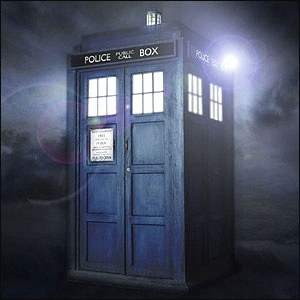
Mr Littlehands - no TARDIS required
The fastest time for a 400m sprint is claimed by Nigel Minihands of the sleepy rustic village of Little Chigglewood, in the year 1972. According to parish records, while the other runners raced off as the starting pistol fired, Mr Minihands merely jogged off, smiling and waving his hands. He claims that he ran so fast he travelled back in time and finished before anyone else had started.
Obviously, the other runners disputed this, but the judging panel was in two minds, being unable to prove things either way. While Mr Minihands attempted to blind the judges with science, the other runners shouted insults from the back of the room and pelted him with fairy cakes and miniature pasties. Sensing that the situation was beginning to turn nasty, and realising that the only remaining ammunition was Mrs Wilbur’s prize-winning trifle (a favourite among the judging panel), the judges came down on the side of the other runners and Sam Diggle was awarded gold.
Nigel Minihands, now in his 60s, disputes the judgment to this day.
2) The Leaning Tower of Pisa – but is it?
Everyone has heard of the famous Leaning Tower of Pisa. However, a little-known scientific study, conducted by Alberto Pizzeria in 1981, casts doubt on the common perception that it is the tower which is leaning. He postulated that the tower is actually standing straight and proud, and it is the rest of Italy which is actually leaning. In the course of his travels around Italy, he noticed that the sea on one side of Italy appeared to be “higher” than on the other, proving his point. Everyone, from the greatest scientists to a small child he met in Naples, told him that the tide was probably out when he visited the east coast and named him “the biggest idiot in the history of idiots”, but Signore Pizzeria would not listen and continues to gate-crash scientific symposia to this day armed only with his notebook and an unwavering belief that one day everyone will see the truth.
3) A caber toss of champions
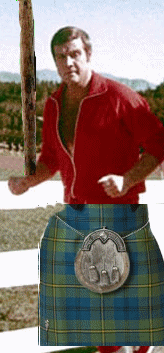
Rare archive footage of Steve McAustin's run-up
The caber toss – the ancient Scottish sport of throwing a 68kg tree trunk as far as possible. Contrary to popular belief, the caber toss event is judged for style rather than distance thrown. The caber should remain upright as the athlete runs, spin when thrown and end up pointing straight away from the thrower. It is this that has cast the results of the 1975 Highland Games into question. In fact, the winner has yet be confirmed. The crowd roared in appreciation as various contestants threw the caber 20, 30 feet. Then a late entrant, Mr Steve McAustin visiting his ancestral home from the USA, threw the caber – and it failed to come down. The UK authorities contacted NASA, who confirmed that the caber eventually made land-fall on the Moon but – and this is the vital point – they couldn’t determine the orientation of the caber in relation to Mr McAustin. Therefore, the judges were unable to confirm the winner of the event.
A special mission to the moon, to be financed by Mr McAustin’s friend Mr Goldman, is scheduled for 2015. It is hoped that this will bring the 1975 Highland Games to a close.
Ah, winter
Winter’s here at last. Cold mornings, icy winds, the threat of snow. I, like another poster, love the crisp clear days. There’s nothing quite like walking through the cold and frost and then getting home to the warm and snug.
We don’t get it much in Cornwall, apart from the last two winters. This last week is the first frost I’ve seen, and the first time this winter that the little snowflake on the dashboard of my car has turned red (indicating that the temperature has dropped below zero degrees).
I’m in two minds about snow, however. On the one hand, “oh, isn’t everything so beautiful!” Everything looks white and fresh. It’s so quiet, and your boots make that lovely crunching sound as you walk along.
On the other hand, I have responsibilities. I have to get to work. That’s not so easy in the snow. OK, driving through a few centimeters of snow isn’t so bad. There’s a fair amount of grip, once you realise that you can’t brake and turn at the same time. Everyone drives nice and slowly (apart from those few in the fast lane who seem to think that traction control makes them invincible). The last couple of years, it snowed, then it was really cold. So we were basically driving on ice, and that’s not so good. The main roads were clear, but getting up the hill to the main road wasn’t so much fun.
It would be great to be a kid again when it snows. You can either get to school or you can’t. That’s your parents’ problem. Someone needs to go and get food in the house, but that’s nothing to do with you. The heating is on full blast, but that bill’s nothing for you to worry about. The kid’s job is to play outside and have fun.
Last year they showed something on the news about Heathrow airport being closed. They showed some kids playing outside in the snow, looking really happy, and talked to them. “Where are you going?” they were asked. “Spain!” they replied. Um, no you’re not. Kids don’t really understand the words “cancelled” or “grounded”. That’s for the parents to worry about.
Well, no snow yet this winter. The current lot doesn’t seem to be coming any further south than Bristol, and that’s over a 100 miles up north. Our lovely crisp bright mornings have turned to mucky rain. And it’s still cold. Lovely.
When Routine Goes Bad
Ah, routine. My life is ruled by it. Many people’s are. Wake up, make up the lunch box, have a shave, have a shower, go to work.
Do work.
Come home, make tea, watch a DVD while eating tea. Watch some more telly. Go to bed.
Simple? Safe, certainly. But it’s a lot of work, in my own head. There are certain programmes to watch on certain days. The same food is eaten on each day each week. And I don’t like this to change.
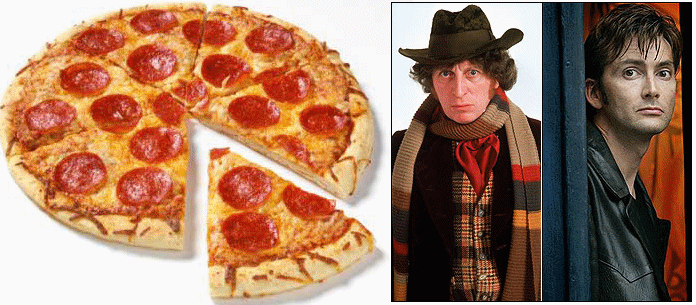
Pizza and Dr Who - the perfect Saturday night combination
For example, Saturday night is pizza night. Pizza and (currently) an episode of Dr Who. The Dr Who is important. I know the episodes really well. That means I can look down at my pizza to sprinkle on the Tabasco without missing anything.
I think of it as my weekly treat. If I “have” to do something else on Saturday night I get mildly irritated. My brain immediately screams “But, but, it’s pizza night!”. I need to designate another night to be pizza night. That mucks up my routine for the alternate night. The sky falls and the world comes to an end. I can’t help thinking this isn’t entirely “normal” (whatever that is).
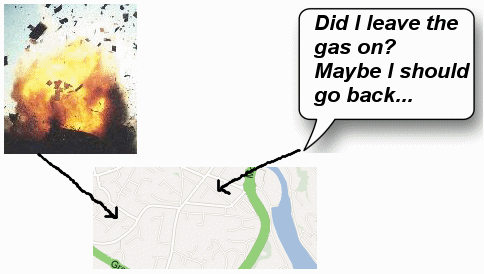
Oops
Routine has its up side, of course. When I leave home, I check various plug-sockets, electrical equipment, the windows and so on in the same order every single time. That way nothing gets missed. I know nothing’s been left on. No worries, no “rushing back home to check”.
On the negative side, I’ve noticed that some things I do are so automatic, they cease to be “things to do” and become instead “the correct number of things to do”. I once had a pair of trousers with an extra button. More than once I left the house with the fly unzipped. My brain insisted I’d done the correct number of things in order to fasten those trousers – the extra button took the place of the fly.

Batman doesn't have this problem - he just locks up and goes
Where do things deteriorate to the point of the ridiculous? When I lock a door I always give the handle a tug to check – normal enough. I then need to leave the immediate vicinity within 4-5 seconds, or I’ll check the door again. Just in case it has magically unlocked itself in the meantime. And I’ll keep checking it until I leave. The absolute knowledge that it’s locked doesn’t help.
Some people describe routine as “boring”. I prefer “predictable”. I’m sure there’s a line there somewhere, I’m just not sure I’m on the right side of it.
Here we go again
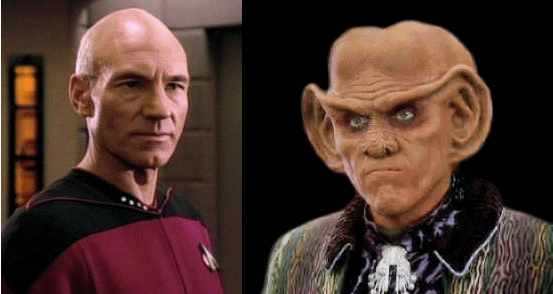
The chap on the left has no use for money. Not so the chap on the right.
Well, we’re well into 2012 and Christmas is but a distant memory. However, it’s not time for me, personally, to hit the yearly reset button just yet (financially speaking, that is).
Christmas is, of course, is an expensive time for many people (by “many”, I mean pretty much everyone who celebrates Christmas). So now that it’s a distant memory, surely that’s a good time to start your own financial year afresh?
I have a massive clump of expenses, starting near the start of December and lasting until the end of January. There’s Christmas, of course. Then there are the membership dues for the two professional organisations I’m a member of. It’s not even as if I still work in the same field as these two organisations, but I still like to keep up with events and advances in my old field. Plus, of course, my ego likes the associated letters after my name. Then there’s the car. For some reason, whenever I decide to change cars I always do it in the first couple of months of the year, which means that the service is always due just after Christmas. Good timing, huh.
So my yearly reset currently lies in February. I can’t help feeling that I work all the year before in order to pay for all this stuff. Or, considering that I pay for it all courtesy of Mr MasterCard and Mr Visa, I guess I work all the year after in order to pay it back.
Star Trek has an interesting take on money – they don’t have any. Captain Picard explains this at some point during “ST- The Next Generation”. This is a great idea, but I certainly don’t see it happening even by the 24th Century (the century in which I believe it is set). It would require a quantum leap in thinking, and the whole world would need to do it at once. And some races still love money in the show – where would the Ferengi be without their gold-pressed latinum?
Well, I started off moaning about money and ended up showing my geekiness. Christmas may be over, but Easter eggs are already hitting the shops (whhhhhaaaat!). Yes, it’s true! So we have that to look forward to.
Tech-no or tech-yes
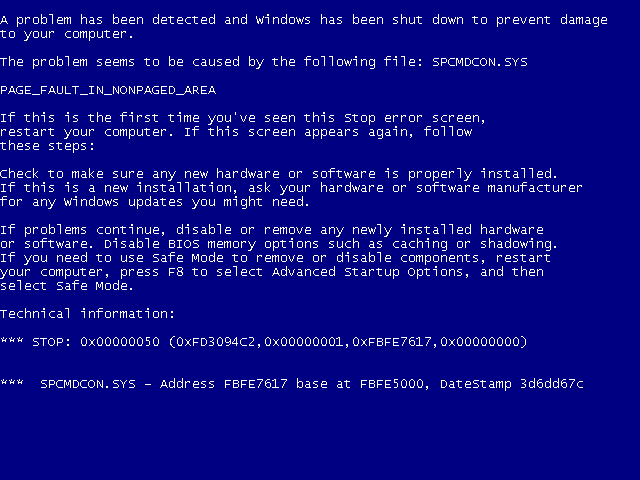
Aargh! Techno fear!
Ah, technology. New stuff. Electronical marvels.
Love it or hate it, it’s everywhere.
I’m constantly in two minds about the whole new technology deal. I tend to desperately want new gadgets but scoff at new innovations. Which is weird, considering I moved from laser research to computer programming – you’d think I’d be more than ultra keen for every new little thing.
Sometimes it’s down to my dislike of change. I get comfortable with an operating system on a computer. I know where everything is and I don’t want it to change. Eventually I get used to the new one of course, but I guess if you’ve spent 10 years with Windows XP, say, Windows 7 comes as a bit of a shock.
Sometimes it’s all about control. Take an automatic gearbox on a car (OK, that’s been around a while, but still). Doubtless it has its advantages, but no car’s going to tell me when to change gear, and if that means red-lining the revs then so be it. Maybe I’m not alone in this one – automatics are fairly rare. I’ve never seen one in a car showroom (of course I’ve never been looking for one) and only ever been in one once.
But I can be dead against new features and grow to love them. When I bought my new (well, pre-owned) car a couple of years ago it had a bunch of stuff I considered ridiculous. Automatic headlights? Automatic windscreen wipers? That’s my job – I was determined to switch it all to manual. A couple of days later I thought it was the best thing since sliced bread. I got a loaner car a couple of weeks ago and when it began to rain I suddenly realised it was getting harder to see and nothing was happening. I have to twiddle a control to get the windscreen wipers to come on? How quaint!
Internet on your phone? Don’t be daft. I held out for years. Who needs that? Me, apparently.
Though as it turns out it’s far too easy to buy massive amounts of MP3s.
e-book readers. Love ’em, hate ’em or haven’t tried ’em? I would like to be a snob about books. Ah, the feel a of real book, the smell of the paper, the look of the beautiful hardbacks on the shelves. Well, my shelves are so full of beautiful hardbacks I decided I’d need to buy an e-book reader, and I’ve never looked back. I’ve decided that the thing I love best about books is the content, rather than the physical thing.
Though as it turns out it’s far too easy to buy massive amounts of books.
Hang on, is this new tech stuff just about getting us, Joe Public, to part with more money? No, that’s too cynical.
So, the upshot of this ramble? Drag me into new tech and I love it. Otherwise I’ll just complain about how unnecessary it is.
The Changing Language

Geoff Chaucer, last seen in the 1300s
Languages change and evolve – we all know that. What surprises me is the speed at which this can happen.
Take a look at this bit of Chaucer from the 14th century:
This frere bosteth that he knoweth helle,
And God it woot, that it is litel wonder;
Freres and feendes been but lyte asonder.
For, pardee, ye han ofte tyme herd telle
How that a frere ravyshed was to helle
In spirit ones by a visioun;
It’s vaguely understandable, but clearly not modern English – see here for a translation. To be honest, after 600 years I’m surprised it’s as close to today’s language as it is.
Then we have slang words. Some appear and stick around, some are less long-lived. Some are merely short-term fads. When I was at school, if we wanted to say something was great, we used the word “skill”.
“Did you see that football match last night? It was skill!”
That particular one has disappeared. We also completely reversed the word “help” – that lasted a few months. If someone asked you if they could “help” you, answering in the affirmative would lead to your school bag being unzipped, turned upside down and your belongings being turfed out all over the playground.
These are short-term slang words attached to a particular group or region, and generally never make it to a dictionary.
I see three sources of language change today which may accelerate the change of language as a whole.
- New slang words and abbreviations which stick around and become an official part of the language. These can originate from text-speak, for example. I wonder how long it will be before “LOL” becomes official? Take “Fail”, usually seen in texts. The first time I saw this I was most confused. “Fail” is a verb, and by itself in a sentence is most likely the imperative, or command form. Someone is commanding me to fail! I eventually realised it’s a new meaning, when someone has themselves failed at something, or something else has failed. I particularly like “Epic Fail”. I generally get on my high horse and refuse to use such terms, but I like this so much, I may start using it. I even love an American phrase, which many hate – “My bad.” This is a great way to accept responsibility for something without even a hint of an apology. It’s very flippant, so be careful when you use it. When explaining a mistake to your boss or trying to avoid a prison sentence, for example, a proper apology is probably a better way to go.
- Technology. Abbreviations which have become proper nouns, for instance “LASER”, or new words to describe new things, like “internet”. Of course, new things have always been invented which needed to be named, but there seems to be so much of this happening these days!
- New words, or existing words whose meanings have changed slightly due to the distribution of English across the world. For example, words such as “elevator” (lift), “sidewalk” (pavement) or “mall” (shopping centre). Although I believe this last word originated in England as a road with market stalls along it (such as Pall Mall in London). The inventive Americans popped a roof over the whole thing and the modern shopping centre was born!
These are my thoughts – a physicist turned computer programmer who really knows nothing about language. I’d love to hear different points of view, a rebuttal or counter argument of my off-the-top-of-the-head “theory”! I’m sure there’s tons of stuff on the internet about this, but research early Sunday morning? I don’t think so.
To apostrophe or not to apostrophe

On the left, an apostrophe. On the right, an apostrophe as it should often be seen - absent.
I don’t usually write on the use of the English language. This is mainly because I’m worried that I’ll make exactly the same mistake in my post that I’m complaining about. Now, that would be ironic.
However, I walked into a major supermarket on Monday (October 31st – Halloween) and was confronted by the following sign:
“In the interests of security, please remove any Halloween mask’s.”
Note the apostrophe. Now, why is that there? How about:
“In the interests of the English language, please get someone who paid attention at school to write your signs.”
“Masks” is a normal plural noun. It doesn’t need an apostrophe, but this is one of the most common mistakes, probably second only to the “its/it’s” confusion, which is almost understandable since it doesn’t follow the rules.
I was tempted to point it out, but knowing my luck I’d be talking to the person who wrote the sign and they’d relieve me of my trolley, put my picture on the “banned from this store” wall and politely ask me to go away.
The “plural noun apostrophe” debacle even has a special name – it’s often called the “butcher’s apostrophe” or “greengrocer’s apostrophe”. This is due to the number of signs one might see on the high street offering “Three apple’s for a pound” and so on. I don’t necessarily blame the schools – we’re taught this stuff – but practice counts and I don’t think people read enough.
And while I’m on a rant, the Christmas decorations in the shop were up. In October! How can we view Christmas as a “special time” if it lasts for months? I can’t wait for the Boxing Day sales so I can get my Easter eggs in. Humph.
So, in the spirit of a very early Christmas and apostrophe hell,
“Merry Christma’s everyone! I hope you get lots’ of present’s!”
The Epic Tale of Eric Thane Part 1
About the author: This poem is the work of the semi-great poet Dralimanakos (ca. 470BC). Although famous for his bad rhyme and lack of grandeur, Dralimanakos was known throughout the land as “someone who really tried quite hard”. This poem, his greatest work, has been faithfully translated from the original Greek by a dedicated team of bored historians.
Come hither, one and all, and hear a tale of heroes and adventure. Hear ye, dear listeners, the tale of unlikely hero of old, Eric Thane!
Part 1, in which Eric listens to a bard and leaves home in search of a great prize.
We meet our hero
Meet our hero, learn his name
Gunther’s brother, Eric Thane
Gunther, he was proud and strong
But Eric? Everything was wrong
Short of stature, rumpled hair
Some would say, “It isn’t fair!”
But nothing ever got him down
Always smiling, ne’er a frown
He never shirked, he did his bit
He worked the fields, he shovelled shit.
Eric makes a decision
Then one day while watching sheep
(It was a fairly boring week)
A famous bard he came to stay
By telling stories, paid his way
He sang of kings and armies vast
He told of famous battles past.
One such tale had all ears open
Of a diamond, long since stolen
Eric heard with widened eyes
The story of this fabled prize
No man knew where now it was
Just that it lay to the north
Eric heard the jewel held magic
To hear it’s lost is surely tragic!
So Eric made a plan that day
That come the morn’, he’s on his way
Towards the north, that jewel to seek
Even if it took all week!
Eric’s first fight
And so next day he sallied forth
Heading up towards the north
Light of step and glad of heart
Armour, sword, he looked the part.
He wandered far across the land
Grass and forest, hills and sand
Some weeks on he reached Great Wood
The tales about it weren’t good
But Eric’s heart was brave and stout
No such tales would keep him out!
Some way in he found a hive
Honey sweet would help him thrive!
He took his sword and cut it down
But then his smile turned to a frown
The bees they swarmed all o’er the place
Stinging him on hands and face.
While braving fending off a bee
Missed his step, did stumble he
Arm outstretched to save him harm
Fell on his sword and cut his arm.
Finally he left the wood
It hadn’t really gone so good
Throbbing arm, no food, no honey
He realised he’d need some money
So from the wood he headed down
Towards a quiet little town.
In Part 2, we’ll join Eric as he continues his adventures and meets the dreaded Siren of the Marsh!
Click for a random post!
Woohoo!
I totally didn't win!
Share Your World
Friday Fictioneers

